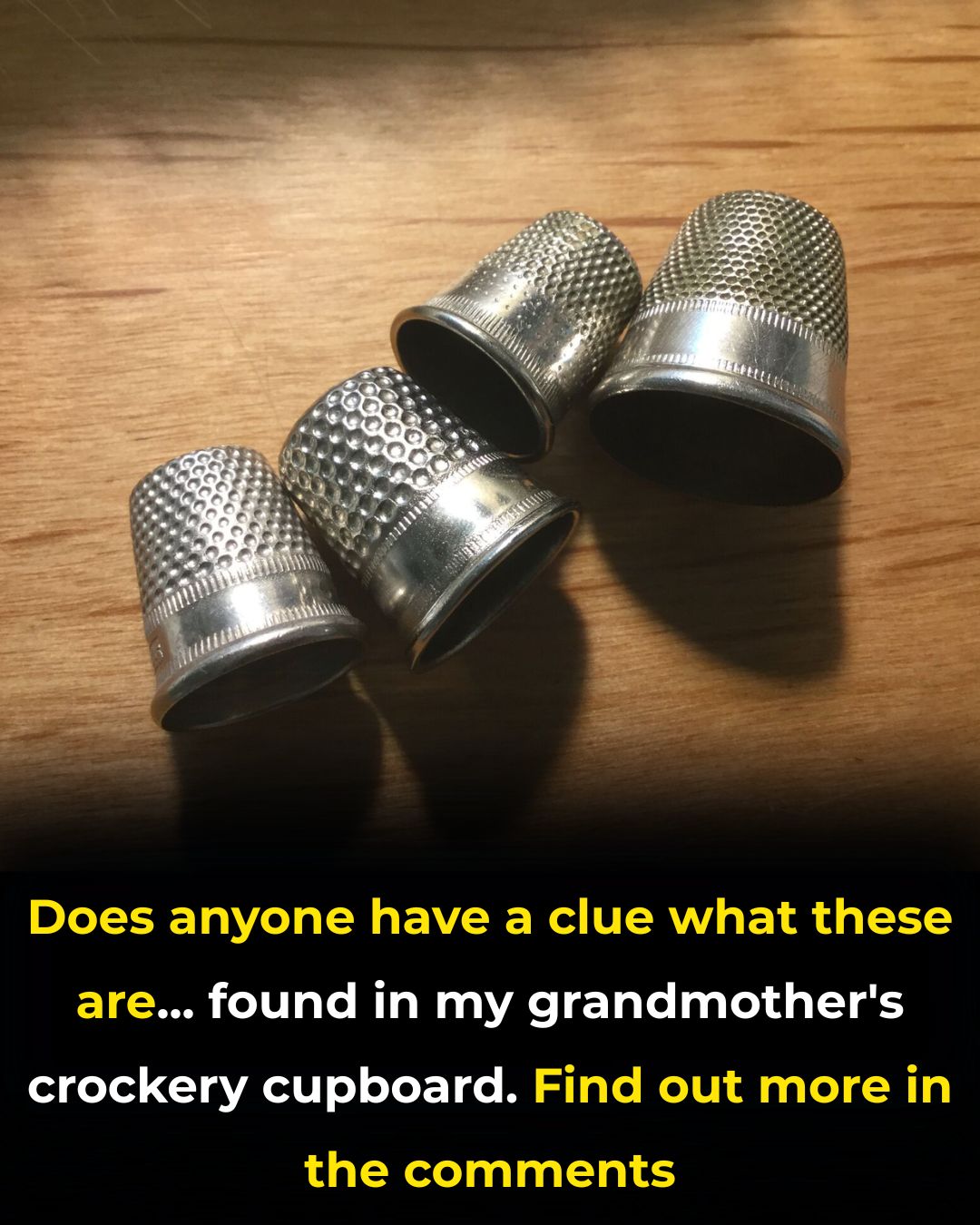
They may look like nothing more than tiny metal caps, but finding them tucked away in an old cupboard—especially one belonging to a grandmother—opens a window into a very different time.
These little items, known as thimbles, were once essential tools in every household.
What Is a Thimble?
A thimble is a small cap worn on the fingertip (usually the middle finger) during hand-sewing. Its purpose is simple but crucial:
Protecting the finger from needle pricks
Helping push the needle through fabric, especially thick or tough material
The tiny dimples on the surface are not decorative; they prevent the needle from slipping and give better grip.
A Look Back Through History
Ancient origins
The earliest thimbles date back thousands of years. Ancient Romans, Egyptians, and early European cultures used thimbles made from bone, leather, wood, and bronze.
Middle Ages to the 19th century
As sewing became an everyday necessity, thimbles grew common in homes across Europe and beyond.
They were produced in:
silver
brass
tin
steel
or decorated metals
Some were simple tools for daily sewing, while others were crafted as elegant decorative items.
Modern times
With the rise of sewing machines and ready-made clothing, thimbles became less essential.
Still, many remain in old sewing boxes, drawers, and cupboards—reminders of a time when repairing clothes was a regular part of life.
Why Are They Often Found in Grandmothers’ Cupboards?
Next Page
