
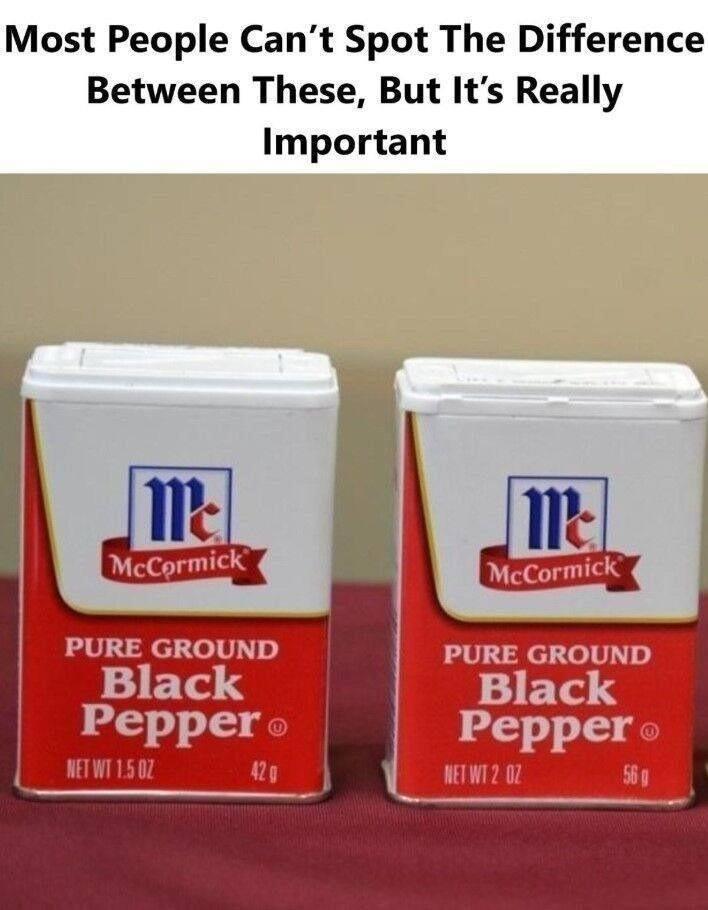
At first glance, it’s just a pepper tin on your spice rack. But look closer—and you’ll find a quiet battle over transparency, trust, and truth in packaging.
The conflict between McCormick & Co., the spice giant, and Watkins Inc., a smaller heritage brand, isn’t about flavor—it’s about how much you’re really getting… and whether you can see it.
🔍 What’s Really Happening?
For years, McCormick sold its “Peppercorn Medley” and other ground pepper blends in 8-ounce round tins—a familiar staple in kitchens across America.
But recently, consumers and competitors noticed something subtle: the tins looked the same… but now held only 6 ounces of pepper—a 25% reduction in product, with little change in price.
McCormick hasn’t hidden the new net weight—it’s printed on the label. But because the tins are opaque and unchanged in size, the missing quarter-pound isn’t obvious until you open it… or compare it side-by-side with a full tin.
Enter Watkins Inc., a 150-year-old company known for transparent practices. They’ve long sold pepper in smaller, clear glass jars—so you can see exactly how much you’re buying. Now, they’re publicly calling out what they call “deceptive downsizing”—a practice known in the industry as “shrinkflation.”
🌐 Shrinkflation: The Silent Price HikeShrinkflation is when companies reduce product size while keeping the price the same—effectively raising the cost per ounce without announcing a “price increase.”
It’s widespread:
Toilet paper rolls with fewer sheets
Ice cream containers that look full but hold 15% less
Cereal boxes filled with air
But pepper? It’s a staple spice—often bought out of habit, not scrutiny. And that’s exactly why critics say opaque packaging makes shrinkflation harder to spot.
