
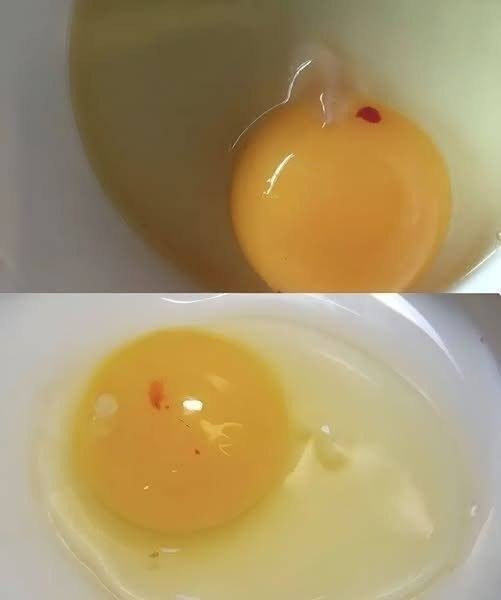
Are They Safe to Eat?
Yes, eggs with blood spots are perfectly safe to eat. Authorities like the United States Department of Agriculture (USDA) and the Egg Safety Center confirm that these eggs are edible and pose no health risk. The blood spot is not an indicator of a spoiled or fertilized egg.
The USDA even accounts for them during grading:
Grade AA and A Eggs: These high-grade eggs are checked by candling (passing over a bright light), and most with visible blood spots are removed. However, some can slip through.
Grade B Eggs: May have more minor defects, including blood spots, and are often used in liquid or powdered egg products.
If the spot bothers you visually or psychologically, you can easily remove it with the tip of a clean knife or a fork tine and use the rest of the egg without issue. The taste, nutritional value, and cooking properties remain unchanged.
Debunking the Myths
Myth 1: “It means the egg was fertilized and contains a chick.”
False. As explained, fertilization is unrelated. Commercial table eggs are almost never fertilized.
Myth 2: “It means the hen was sick or unhealthy.”
Not necessarily. While severe vitamin deficiencies or illness could increase frequency, an occasional blood spot is usually a benign, natural occurrence.
Myth 3: “Brown eggs have more blood spots than white eggs.”
The eggshell color is determined by the hen’s breed and has no correlation with the likelihood of interior spots.
Myth 4: “You must throw the whole egg away.”
Absolutely not. At most, remove the spot if you prefer. Discarding it is an unnecessary waste of perfectly good food.
A Note on “Bloody Egg Whites”
Occasionally, you might see a pinkish or reddish tint to the egg white. This is rarer and is caused by porphyrin, a natural pigment that can seep from the shell membrane into the white. Like blood spots, this is not a sign of spoilage or fertilization, and the egg is safe to consume after cooking
When Should You Discard an Egg?
Focus on actual signs of spoilage, not just natural pigments:
Unpleasant, sulfurous odor (raw or cooked)
Unusually runny or thin egg white
A pink, green, or iridescent sheen in the white or yolk (indicating bacterial growth)
Eggs that are cracked or have been stored improperly
When in doubt, perform the float test: place the egg in a bowl of water. Fresh eggs sink; old eggs float due to a larger air cell. Floating eggs should be discarded.
The Bottom Line
Those little red spots are a harmless, natural imperfection—not a sign of an embryo, disease, or spoilage. They are a reminder that eggs come from living animals, and minor variations are part of nature’s process.
So next time you encounter one, don’t let it ruffle your feathers. Scoop it out if it bothers you, or simply whisk it in—it will disappear during cooking. By understanding what these spots really are, we can reduce food waste and enjoy our eggs with confidence and clarity.
