
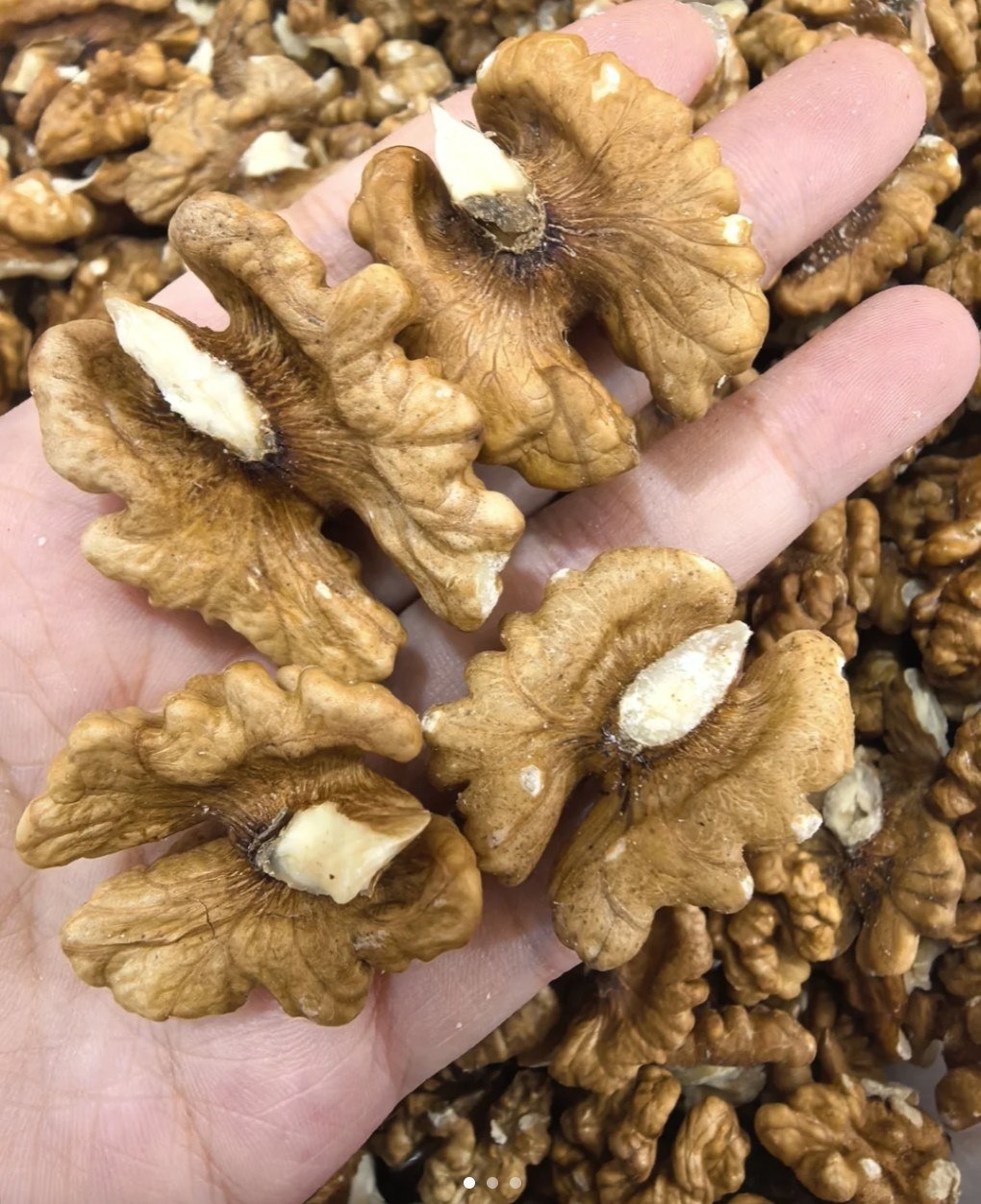
How to Eat Walnuts for Maximum Benefit
Serving Size: About 1 ounce per day (approx. 7 whole walnuts or 14 halves). This provides benefits without excessive calories.
Preparation: For best nutrient absorption, consider soaking or toasting them. Eat them raw or lightly roasted, and choose unsalted varieties to control sodium intake.
Easy Ways to Add Them:
Topping for oatmeal, yogurt, or salads.
Blended into smoothies or ground into “walnut meat” for tacos.
Added to baked goods, grain bowls, or eaten as a simple snack.
Important Considerations & Cautions
Allergies: Walnuts are a common tree nut allergen. Avoid them if you have a known allergy.
Moderation is Key: Overconsumption can lead to excessive calorie intake and potential digestive discomfort due to high fiber content.
Interactions: The high vitamin K content can interact with blood-thinning medications like warfarin. Consult your doctor if you are on such medication.
Quality: Store walnuts in an airtight container in the refrigerator or freezer to prevent their healthy fats from turning rancid.
The Bottom Line:
Incorporating a moderate, daily serving of walnuts into a balanced diet is a scientifically-supported strategy to boost heart, brain, and overall health. They are a nutritional powerhouse, but they are not a magic bullet—think of them as one excellent component of a varied, whole-food diet.
Always consult with a healthcare provider or registered dietitian for personalized advice, especially if managing a specific health condition.
