
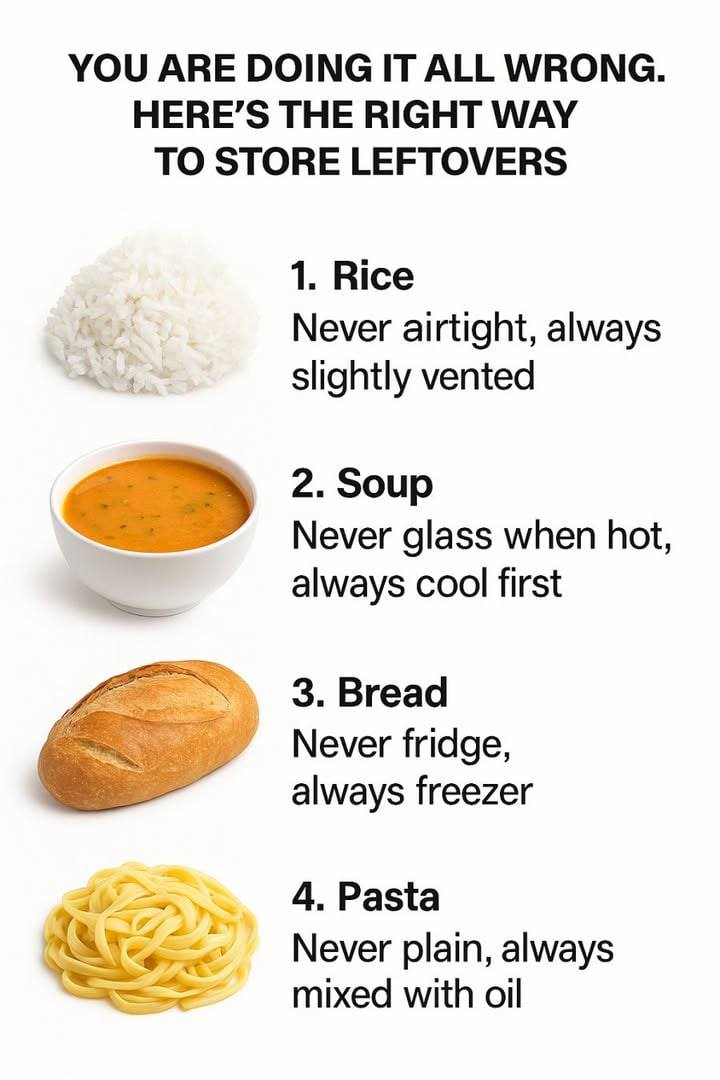
1. Understanding the Basics of Leftover Storage
The foundation of proper leftover storage is knowing the conditions under which food remains safe and appetizing. Bacteria multiply rapidly at temperatures between 40°F and 140°F, so cooling food quickly and storing it properly is essential.
Leftovers should be refrigerated within two hours of cooking. If the temperature is above 90°F, such as during a summer picnic, they should be refrigerated within one hour. Store leftovers at 40°F or below and consume them within three to four days for the best quality and safety.
2. The Importance of Proper Container Selection
Choosing the right container plays a major role in preserving the quality and safety of leftovers. Airtight containers help prevent moisture loss and contamination. Glass containers are especially useful because they are durable, nonreactive, and safe for reheating.
For foods that expand, such as soups or stews, leave about an inch of space at the top of the container to allow for expansion during freezing. Using containers that match portion sizes also reduces excess air exposure, which can cause freezer burn.
3. Why Rice Should Never Be Stored Airtight
Storing rice in airtight containers can trap moisture, creating an environment that encourages the growth of bacteria such as Bacillus cereus, which can cause foodborne illness.
To store rice safely, allow it to cool quickly and place it in a container with a loose-fitting lid or a slight vent. This allows moisture to escape and reduces bacterial growth. Stored rice should be consumed within one to two days and reheated thoroughly before eating.
4. Cooling Soup Before Storing in Glass Containers
Hot liquids can cause glass containers to crack due to thermal shock. To avoid this, let soup cool to room temperature before transferring it to glass containers.
To speed up cooling, divide the soup into smaller portions using shallow containers. This increases surface area and allows heat to dissipate more quickly. Once cooled, cover and refrigerate. When reheating, ensure the soup reaches at least 165°F for safe consumption.
5. The Best Way to Store Bread: Freezer vs. Fridge
While refrigerating bread may seem logical, it actually causes bread to stale faster due to starch retrogradation, where starch molecules recrystallize.
The freezer is a better option for long-term storage. Wrap bread tightly in plastic wrap or aluminum foil, then place it in a freezer bag to prevent freezer burn. Thaw at room temperature or toast directly from frozen for best results.
Next Page
