
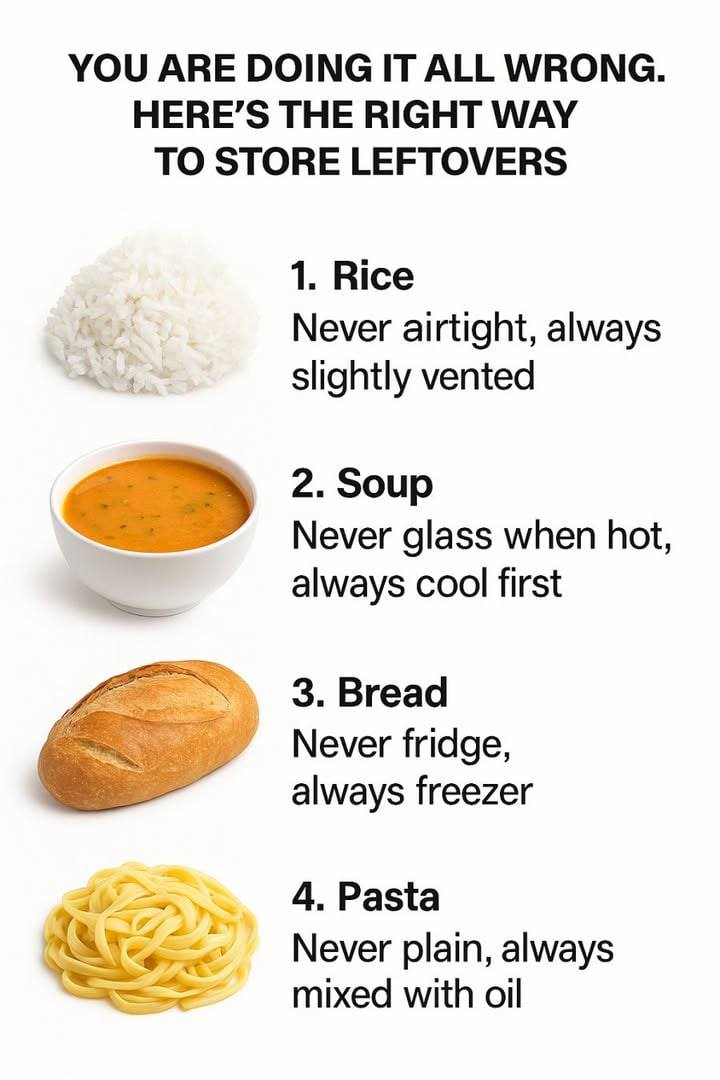
6. Storing Pasta: Mixing with Oil to Prevent Stickiness
Cooked pasta tends to clump together when stored without sauce. Tossing it with a small amount of olive oil before storing helps prevent sticking by coating the strands.
Store pasta in an airtight container in the refrigerator and consume it within three to five days. When reheating, adding a splash of water can help restore moisture and prevent dryness.
7. Maximizing Freshness with Proper Labeling
Labeling leftovers may seem unnecessary, but it significantly improves food safety and reduces waste. Labels should include the date and a brief description of the contents.
This practice makes it easier to track freshness and ensures leftovers are eaten while still safe and flavorful. Use waterproof labels or permanent markers that won’t smudge in the fridge or freezer.
8. Utilizing the Right Temperature Settings
Refrigerator and freezer temperatures are critical for food preservation. Keep your refrigerator at 40°F or below and your freezer at 0°F.
Use an appliance thermometer to verify accuracy, as built-in displays can be unreliable. Keeping your fridge and freezer organized also helps maintain consistent temperatures by allowing proper airflow.
9. The Role of Portioning in Effective Leftover Storage
Portioning leftovers before storage saves time and reduces waste. Dividing food into meal-sized portions makes reheating easier and more efficient.
This method prevents repeated reheating of large quantities, which can degrade food quality. Portioning also improves organization, making it easier to find what you need.
10. How to Reheat Leftovers Safely and Efficiently
Proper reheating ensures leftovers are both safe and flavorful. All leftovers should be reheated to an internal temperature of at least 165°F.
When using a microwave, cover food with a microwave-safe lid or vented wrap to retain moisture. Stir or rotate food halfway through heating to ensure even warming. For items like pizza or fried foods, reheating in an oven or toaster oven helps preserve texture.
11. Viral Hacks Worth Trying for Leftover Storage
Many online storage hacks can make leftover management easier. For example, freezing sauces or herbs in oil using ice cube trays allows you to use small portions as needed.
Another popular tip is storing leafy greens with a paper towel in the container to absorb excess moisture and keep them crisp longer. These simple tricks can extend freshness and reduce food waste.
